
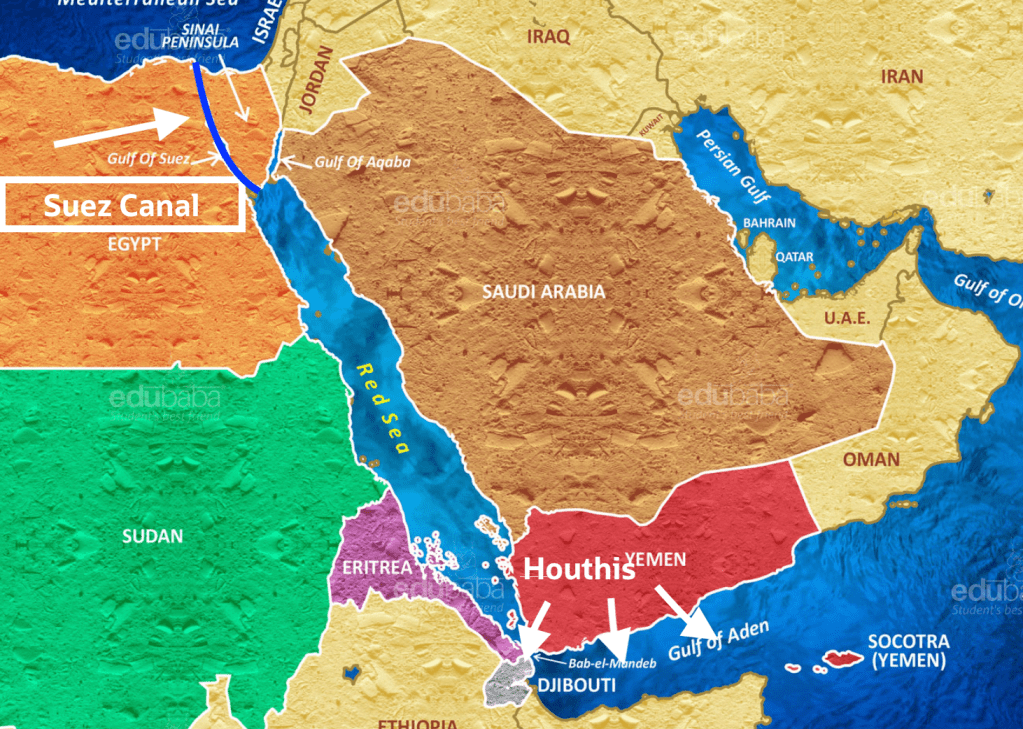
The Red sea & the Suez Canal
Before we get into what everyone is reporting on, it’s important to understand what is happening from a geographic standpoint.
The Red Sea provides a very expedited route for goods traveling from Asia into Europe. Ships carrying goods can take up to 10 extra days to travel around the cape of good hope.
The Suez canal, along with the Panama canal provide immense savings in not only time, but cost (think fuel and wage costs), along with a faster delivery to buyers.
Why did this start in the first place?
The Houthis began these guerilla rocket and drone attacks in response to the Israel-Hamas war that occurred on October 7th.
Since then, they have attacked several commercial ships carrying goods with drones and ballistic missiles.
The Houthis have claimed that they are attacking all ships that are aiding/supplying Israel with goods. However, it is unclear that those facts are true at all. They seem to be targeting any ships they can.
In fact, when you look at the first week of January compared to January of last year there has been a 35% decrease in cargo transported through the Suez Canal.
In response to these attacks, major shipping companies such as Maersk have diverted their sea cargo through safer passage by other sea routes.
Who are the Houthis, and where did they come from?
The Houthis, officially known as Ansar Allah ( Supporters of God), are a group that sprouted up in the 1990’s in Yemen. They are predominately made up of Shia tribe, which is the 2nd largest branch of Islam.
Under the leadership of Hussein al-Houthi, the Houthis emerged as a dissident movement against Yemen’s President Ali Abdullah Saleh.
They accused Saleh of corruption and alleged support from Saudi Arabia and the United States. Inspired by Lebanon’s Shia political and military organization Hezbollah in 2003, the Houthis adopted an official slogan that opposed the United States, Israel, and the Jewish population.
Hussein al-Houthi was later killed by the Yemeni military in Saada in 2004, triggering the Houthi insurgency.
This came after he resisted Saleh’s orders for his arrest. Subsequently, the movement has primarily been led by his brother, Abdul-Malik al-Houthi.
As things currently stand, you can see the current map of Yemen below and where how is it controlled by different groups.
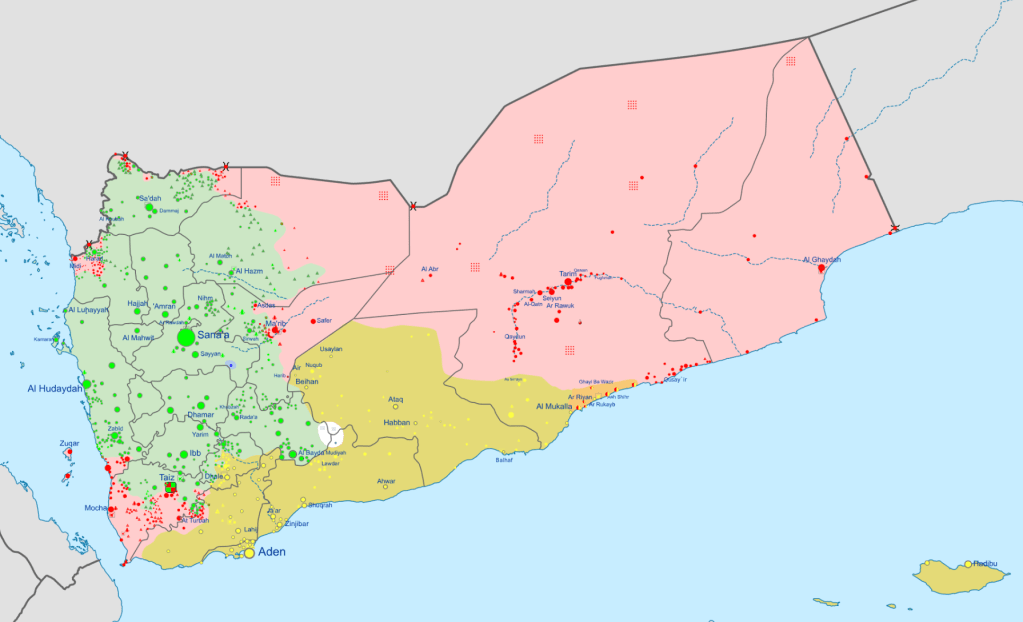
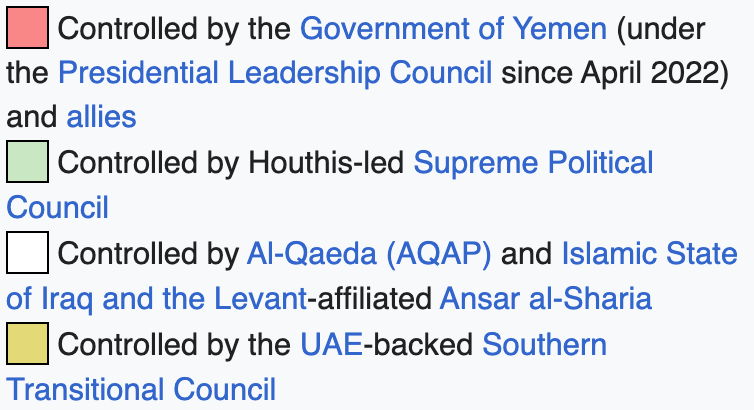
Due to the Houthi controlled territory on the Red Sea, there continues to be a constant threat toward any vessels that are going through the Suez Canal.
A military spokesman claimed today that they would continue to attack whenever the following occurred, such as the “transit of Israeli ships or those carrying goods to the occupied Palestinian ports,” and said they would carry on at “whatever the cost.”
This statement was hours after the United States and the UK targeted Houthi weapons that were used in targeting vessels traveling along the Red Sea.
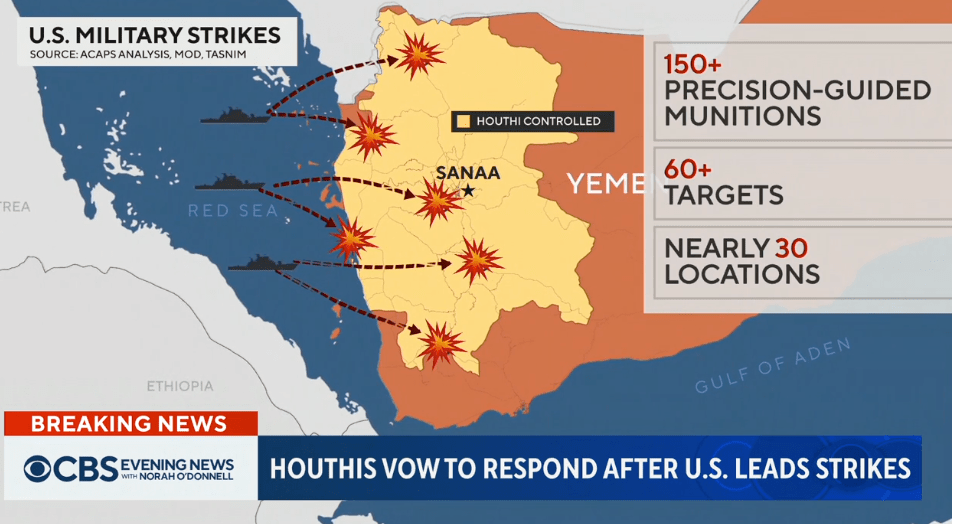
Source: CBS News
Houthi officials have strongly criticized the attack on their lands, describing it as unjustified and “barbaric.”
They have also issued threats of further targeting Israeli ships or vessels heading towards the occupied Palestinian territories.
The U.S. President, Joe Biden, announced these strikes late on Thursday, marking an escalation of tensions that have been simmering in the Middle East since the Hamas terror attacks against Israel on October 7 and the subsequent Israeli Defense Forces’ campaign in the Gaza Strip.
From what we can deduce, the Houthis will not stop their attacks until the siege of the Gaza strip is withdrawn and the Palestinian people are no longer at risk.
Discover more from Elephantries
Subscribe to get the latest posts sent to your email.
 Elephantries