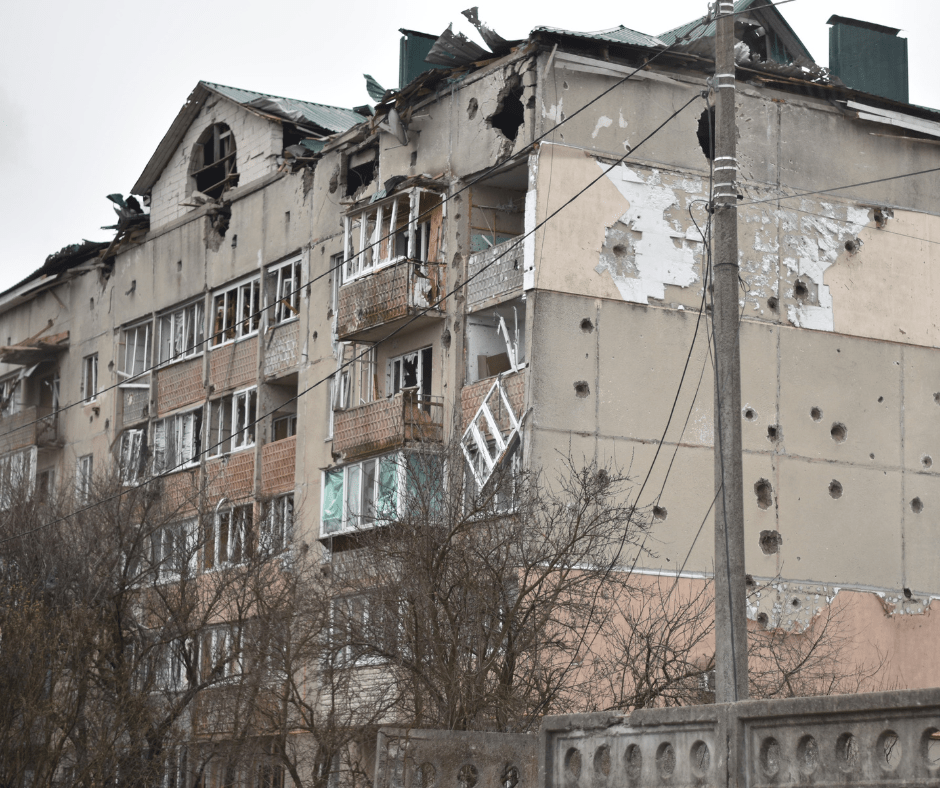
Why are Israel and Palestine fighting?

In order to understand why this is happening, we need to first comprehend where this is all stemming from. This will be best explained if we are able to take a quick history lesson on the subject.

Historical Background

The land known today as Israel and the Palestinian territories has been inhabited by various peoples throughout history, including the ancient Israelites and Philistines.

By the late 19th century, it was part of the Ottoman Empire, and this area was predominantly Arab and Muslim, with a small Jewish minority.

The late 19th and early 20th centuries saw the rise of Zionism, a movement among Jews to establish a national homeland in what was then Palestine. This led to increased Jewish immigration to the area, especially as Jews fled persecution in Europe.

After World War I, the League of Nations awarded Britain the mandate to govern Palestine. The Balfour Declaration of 1917, issued by Britain, supported the establishment of a “national home for the Jewish people” in Palestine but also called for protecting the rights of the existing non-Jewish communities. Tensions between Jewish and Arab communities grew over land and political rights.

In 1947, the United Nations proposed partitioning Palestine into separate Jewish and Arab states, with Jerusalem as an international city. The plan was accepted by Jewish leaders but rejected by Arab leaders.

In 1948, Israel declared independence the moment that the British mandate ended, leading to the first Arab-Israeli war. Hundreds of thousands of Palestinians fled or were expelled from their homes in what became Israel, creating a major refugee crisis and territorial disputes.

Results of that war:

  • Israeli victory
  • Partial Jordanian victory
  • Palestinian Arab, Egyptian, and Syrian defeat
  • Isreal gets to keep the land alloted by the partition plan that was set forth by the United Nations and captures the majority of the land allotted to the Arab state.
  • Jordanian’s rule the west bank and Egyptians occupy the Gaza Strip.

There have been several wars and many efforts at peace since this event in 1948, including the 1967 Six-Day War, where Israel captured the West Bank, Gaza Strip, and East Jerusalem, territories that Palestinians claim for a future state.

Despite various peace processes, including the Oslo Accords in 1993, significant disagreements remain over key issues such as borders, the status of Jerusalem, Israeli settlements in the West Bank, and Palestinian refugees’ right of return.

Today, the conflict between these two groups has continued to take a rocky path forward, especially since the recent attack on Oct 7th, 2023.

Current Status

Since the Oct 7th attack, there has been serious turmoil between both parties. Hamas, the Palestinian terrorist group that was responsible for this attack immediately retreated back behind the walls of the Gaza strip and went into hiding.

They have also taken fortified positions and have networks of tunnels all over the Gaza strip they continue to utilize.

It appears that Hamas have been involving a large amount of civilians in the conflict by using many people as human shields when fighting the Israelis.

Unfortunately Israelis have also had their share of Palestinian civilian casualties, especially from their coordinated air attacks.

Results of Oct 7th attack:

  • 1,609 Hamas Militants Killed – 200 captured
  • 1,143 Israelis killed (376 security forces, 767 civilians, 36 children)
  • 3,400 Israeli civilians and soldiers wounded
  • 247 Israeli civilians and soldiers taken captive

As many as 44 countries identified this attack as an act of terrorism, although some Arab and Muslim countries claim that it was Israel’s occupation of their own Palestinian territories that was the main cause.

As it stands, Israeli forces have clearly shown the upper hand and have driven Hamas, along with about one million Palestinians into the Rafah (the bottom left corner of Gaza strip that shares a border with Egypt).

President Biden has made it clear recently that he is on the same page with Netanyahu and is committed to help defeat Hamas entirely.

He is urging Netanyahu to allow most of these Palestinian refugees to get out while they still can, but Netanyahu wants to proceed regardless.

“Look, it’s either Israel or Hamas. There is no middle way,” Netanyahu said. “We can’t leave a quarter of the Hamas terror army in place. They’re there in Rafah. This would be equivalent to saying, you know, after the Allies fought back, gone through Normandy, went through Germany, and you’d say, well, we’ll leave a quarter of the Nazi army in place and we won’t go into Berlin, the last stronghold.”

Netanyahu also seems to have the full backing of the Israeli people. Unfortunately peace talks have mostly failed and it appears inevitable that Israeli forces will be going in soon.

Joe Biden & Border Security.

Introduction

The United States is currently facing a significant border crisis, characterized by an unprecedented surge in migrants arriving at its southern border.

What’s more, is that the current administration seems to not give a rat’s ass to get things under control.  At this time, we can only assume that they are deliberately opening the flood gates to let illegal immigrants into our country.

The question is……. why?

This situation has not only strained the resources and infrastructure designed to manage border crossings but has also intensified the political debate around immigration policies and border security.

The crisis presents complex humanitarian, logistical, and political challenges, reflecting broader issues of global inequality and political instability.

This blog post aims to shed light on the current border crisis, exploring its causes, challenges, and the search for viable solutions.

If this situation isn’t resolved quickly, I fear that there be grave long-term consequences for the United States and its tax-paying citizens.

Background and Context

For decades, the U.S. has been a focal point for migrants and asylum seekers from around the world, drawn by the promise of safety, opportunity, and a better life.

I still believe that this assertion holds true today.  America is the greatest nation in the world – for now.

The dynamics of migration to the U.S., particularly across the southern border, have been influenced by a complex interplay of factors, including economic disparities, violence, and the political instability in other countries that drove its citizens to flee for a better life.

Recent years have seen a notable increase in the number of families and unaccompanied minors attempting to cross the border, many fleeing dire conditions in Central America and beyond.

This surge has overwhelmed existing border management and immigration processing systems, leading to a situation often described as a crisis.

The roots of this crisis are deep and multifaceted. Economic inequality, lack of access to education, job opportunities, and basic services, coupled with violence and persecution in home countries, drive many to embark on the perilous journey to the U.S.

Additionally, climate change (No, not manmade climate change) has begun to exacerbate these push factors, with natural disasters and changing weather patterns disrupting livelihoods, especially in agriculturally dependent regions.

Incorporating the role of the current administration’s policies and their negative impact on the flow of migrants is crucial to presenting a comprehensive view of the situation.

Current Challenges

The U.S. border crisis is marked by several immediate and long-term challenges.

Logistically, the surge in arrivals has put unprecedented pressure on border processing facilities, many of which are ill-equipped to handle the volume or the specific needs of vulnerable populations, such as unaccompanied minors.

Humanitarian challenges are also significant, with reports of overcrowded conditions and limited access to basic services, raising serious concerns about the wellbeing of migrants.

Politically, the crisis has become a focal point of intense debate, reflecting broader divisions within the U.S. regarding immigration policy.

Local communities near the border find themselves on the front lines, grappling with the immediate impacts of increased arrivals, from stretched resources to humanitarian outreach efforts.

The state of Texas has recently taken it upon itself to secure its own borders since they are getting railroaded by the federal government.

Humanitarian Concerns

The conditions faced by migrants at the U.S. border and in detention facilities have drawn international attention and criticism. Reports of overcrowding, limited access to healthcare, and prolonged detention times highlight the human cost of the crisis.

Humanitarian organizations and advocacy groups have called for immediate improvements to conditions, emphasizing the need for a more compassionate and comprehensive approach to migration management.

Ironically, this is the result of many of these activist and vocal groups own political policies. 

For example, Joe Biden ended the “remain in Mexico” policy, which was put into law by former president Donald Trump in 2019.  This policy required asylum seekers arriving at the U.S.-Mexico border to stay in Mexico while their immigration cases were processed in U.S. courts.

The policy aimed to deter fraudulent asylum claims and reduce the strain on U.S. immigration resources by preventing asylum seekers from staying in the U.S. during the adjudication process.

Policy Responses and Political Debate

In response to the surge in migrant arrivals, the current U.S. administration has faced criticism and scrutiny over its border management and immigration policies.

Critics argue that policies allowing for the continued flow of migrants have contributed to the crisis, pointing to decisions that they believe encourage illegal immigration.

Supporters of the administration, however, emphasize the complexity of the issue, highlighting efforts to address the root causes of migration through diplomatic and aid initiatives aimed at improving conditions in home countries.

The political debate surrounding the border crisis is deeply polarized, with differing views on the best path forward.

Some advocate for stricter border controls and immigration policies to deter illegal crossings, while others call for comprehensive immigration reform that provides legal pathways for migrants and addresses the humanitarian aspects of the crisis.

Proposed policy solutions vary widely, from enhancing border security and streamlining the asylum process to increasing support for countries from which many migrants are fleeing.

The current administration has also sought to balance enforcement with measures aimed at humanitarian relief, though these efforts have faced challenges in implementation and criticism from various quarters.

It is my strong belief that the current administration has exacerbated this situation in several ways.  

One can draw a similar comparison between this and the issue of electric vs. gas powered vehicles and really energy in general. 

You never make an immediate leap into something without a short-term and long-term strategy.  In the example of electric vs. gas cars, you need gasoline powered cars and infrastructure to support the use of them for quite some time, even if the plan is to move to all electric vehicles. 

We need time to build out an electric infrastructure that will take at least a decade.  You need charging stations, more power for grid use, ways to recycle an influx of batteries, and you need enough resources to build so many electric cars.

We are simply not there yet.  Several states deal with power outages during winter and summer time due to grid use.

Potential Solutions and Outlook

Addressing the root causes of migration is essential to any long-term solution to the border crisis.

This includes international cooperation to improve economic stability, governance, and security in the countries most affected by migration flows.

Domestically, there is a call for immigration system reform that can efficiently process asylum claims, provide humanitarian support to migrants, and implement fair but effective border security measures.

The outlook for the border crisis depends on a range of factors, including political will, international collaboration, and the efficacy of policy measures aimed at addressing both the symptoms and root causes of migration.

As the situation evolves, the need for comprehensive and sustainable approaches to immigration and border management remains clear.

One thing is for sure.  The border must be secured.  We need to get the border wall completed ASAP.  We simply cannot afford to have millions of illegal immigrants flooding into our country unchecked. 

At the same time, we need to ramp up our efforts to expediting illegal immigrants into the country that can contribute in a meaningful way.

The need to have people with valuable skills continuously coming to our country will always remain, but we are also facing a shortage in people willing to do labor and service jobs. 

Conclusion

The current U.S. border crisis reflects broader, interconnected challenges facing our global community. While immediate actions are necessary to alleviate the humanitarian concerns at the border, long-term solutions require a commitment to addressing the root causes of migration and creating more equitable, stable conditions worldwide.

One thing is for sure.  America cannot continue to bear the responsibility and the financial burden of making all this happen, as we seem to always do. 

As the debate over border management and immigration policy continues, it is essential to treat this situation as one would triaging a patient in a hospital setting.

First thing is first – we need to stop the bleeding before it leads to the demise of our country. One can only hope that our leadership will change hands in 2024.

2024 World Economic Forum

Be honest, what do you actually know the World Economic Forum? My curiosity was genuinely sparked when my old CEO of indeed.com, Deko was one of the chosen business leaders to attend.

Lets start with a quick background and dive into what it entails.

Davos 2024 marks the 54th Annual Meeting of the World Economic Forum. With the overarching theme of “Rebuilding Trust,” this gathering strives to rejuvenate collective unity and reinforce the core principles of transparency, consistency, and accountability among leaders.

The agenda encapsulates a spirit of returning to fundamentals, fostering open and constructive discussions among government officials, business leaders, and representatives of civil society.

The ultimate aim is to facilitate a holistic understanding of our increasingly intricate world and to provide foresight by presenting the latest advancements in science, industry, and society.

Throughout the week, sessions will delve into cutting-edge proposals for global progress in areas such as security, trade, economic growth, job creation, climate and environmental action, the energy transition, technological evolution, and health and well-being.

Before we dive in, it is important to establish the five W’s: who, what, when, where and why behind the World Economic Forum.

Let’s start with the Who. 

Who is invited to this summit? Is it all leaders of the world?

For the 2024 summit, over 100 governments were invited to the table. It appears that there was about 60 heads of government and state that made an appearance.

Approximately 1,600 business leaders are expected to attend, including over 800 of the world’s foremost CEOs and chairs representing the World Economic Forum’s Members and Partners.

Additionally, there will be a presence of over 150 Global Innovators, Tech Pioneers, and transformative Unicorns reshaping various industries.

The event will also welcome over 200 individuals from the Forum’s Global Shapers, Young Global Leaders, and Social Entrepreneurs communities, who will showcase local innovations and solutions.

Furthermore, more than 150 experts and leaders from the world’s preeminent universities, research institutions, and think tanks will participate.

To add to the diversity of voices, over 40 leaders from labor, non-governmental organizations, and religious communities in civil society will be in attendance.

It is important to also note who did NOT show up to this event. Interestingly enough here is a list of some of the largest figure heads that did not make an appearance:

  • Joe Biden – American President
  • Emmanuel Macron – French President
  • Rishi Sunak – British Prime Minister
  • Luiz Inácio Lula da Silva – Brazilian President
  •  Xi Jinping – Chinese President
  •  Vladimir Putin – Russian President
  • Volodymyr Zelenskyy – Ukrainian President

It’s reasonable to assume that a few leaders on this list above are not exactly on good terms with one another, hence the no-show.

The What.

The World Economic Forum this year has over 200 sessions that were recorded and completely accessible to the public here.

A few examples of some of the topics include:

  • Achieving Security and Cooperation in a Fractured World
  • Creating Growth and Jobs for a New Era
  • Artificial Intelligence as a Driving Force for the Economy and Society
  • A Long-Term Strategy for Climate, Nature and Energy

I was able to look at several of these conversations are they were very informative and eye opening. I highly recommend you take a look at all you can to stay informed.

The When & The Where.

The 2024 Annual Meeting of the World Economic Forum is taking place right now from 15 – 19 January in Davos, Switzerland. It is typically held at the end of January every year.

The World Economic Forum was founded by a German Engineer named Klaus Schwab in 1917.

The World Economic Forum (WEF) is most prominently recognized for its yearly gathering held at the end of January in Davos, a picturesque mountain resort nestled in the eastern Alps region of Switzerland.

This event draws together approximately 3,000 paying members and carefully selected participants, encompassing investors, business magnates, political figures, economists, celebrities, and journalists.

These attendees converge for a duration of up to five days, engaging in discussions across 500 sessions to address global challenges and opportunities.

The Why.

The foundation’s stated mission is “improving the state of the world by engaging business, political, academic, and other leaders of society to shape global, regional, and industry agendas”.

The organization operates independently and without any affiliations to specific interests.

It maintains a strong commitment to demonstrating entrepreneurial spirit for the benefit of the global public, consistently upholding the highest levels of governance and ethical standards.

Moral and intellectual integrity form the core principles guiding all its endeavors.

The World Economic Forum’s actions are influenced by a distinctive institutional culture rooted in the stakeholder theory, which claims that an organization is responsible to all segments of society.

This institution prudently combines and harmonizes the strengths of various types of organizations, including those from the public and private sectors, international bodies, and academic institutions, to create a balanced approach that serves the greater good.

The Houthis + the Suez Canal.

The Red sea & the Suez Canal

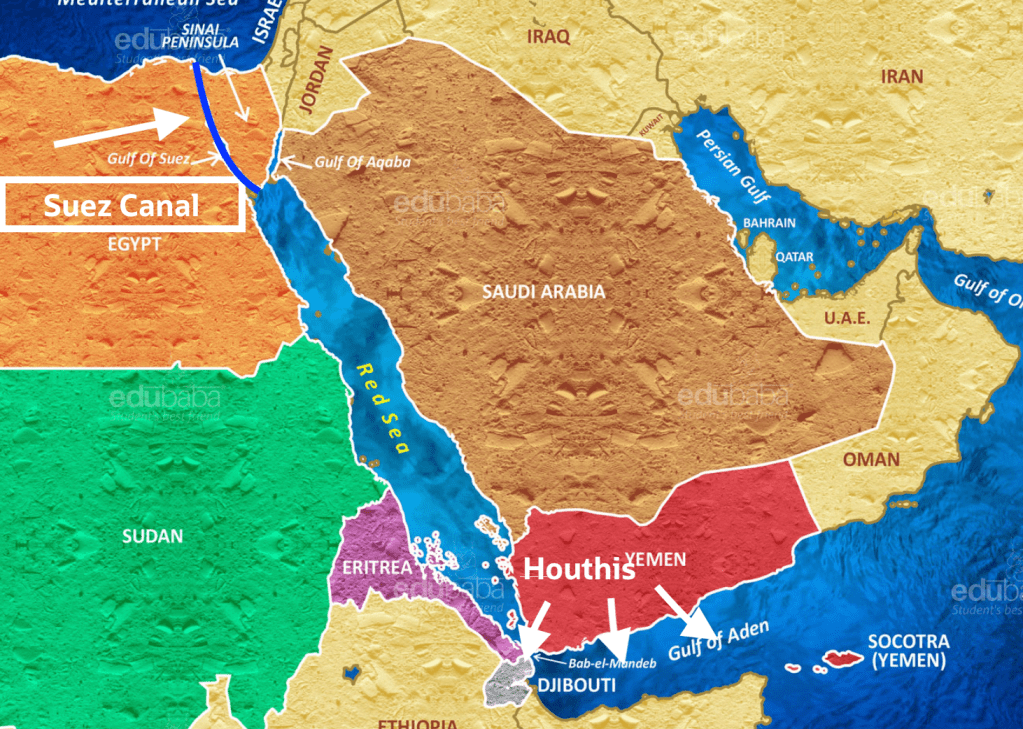
Before we get into what everyone is reporting on, it’s important to understand what is happening from a geographic standpoint.

The Red Sea provides a very expedited route for goods traveling from Asia into Europe. Ships carrying goods can take up to 10 extra days to travel around the cape of good hope.

The Suez canal, along with the Panama canal provide immense savings in not only time, but cost (think fuel and wage costs), along with a faster delivery to buyers.

Why did this start in the first place?

The Houthis began these guerilla rocket and drone attacks in response to the Israel-Hamas war that occurred on October 7th.

Since then, they have attacked several commercial ships carrying goods with drones and ballistic missiles.

The Houthis have claimed that they are attacking all ships that are aiding/supplying Israel with goods. However, it is unclear that those facts are true at all. They seem to be targeting any ships they can.

In fact, when you look at the first week of January compared to January of last year there has been a 35% decrease in cargo transported through the Suez Canal.

In response to these attacks, major shipping companies such as Maersk have diverted their sea cargo through safer passage by other sea routes.

Who are the Houthis, and where did they come from?

The Houthis, officially known as Ansar Allah ( Supporters of God), are a group that sprouted up in the 1990’s in Yemen. They are predominately made up of Shia tribe, which is the 2nd largest branch of Islam.


Under the leadership of Hussein al-Houthi, the Houthis emerged as a dissident movement against Yemen’s President Ali Abdullah Saleh.

They accused Saleh of corruption and alleged support from Saudi Arabia and the United States. Inspired by Lebanon’s Shia political and military organization Hezbollah in 2003, the Houthis adopted an official slogan that opposed the United States, Israel, and the Jewish population.

Hussein al-Houthi was later killed by the Yemeni military in Saada in 2004, triggering the Houthi insurgency.

This came after he resisted Saleh’s orders for his arrest. Subsequently, the movement has primarily been led by his brother, Abdul-Malik al-Houthi.

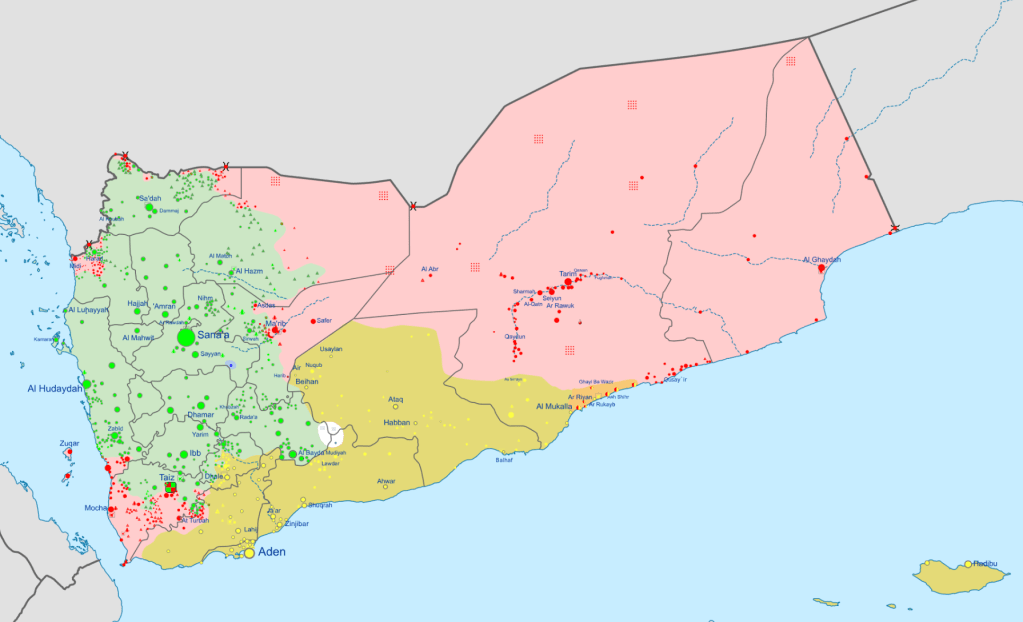
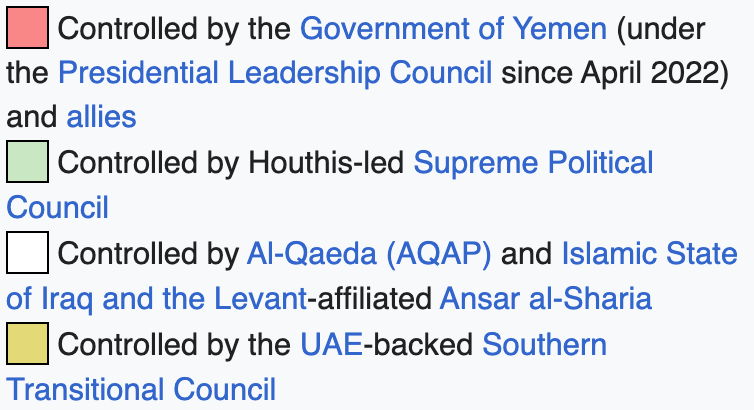
As things currently stand, you can see the current map of Yemen below and where how is it controlled by different groups.

Due to the Houthi controlled territory on the Red Sea, there continues to be a constant threat toward any vessels that are going through the Suez Canal. 

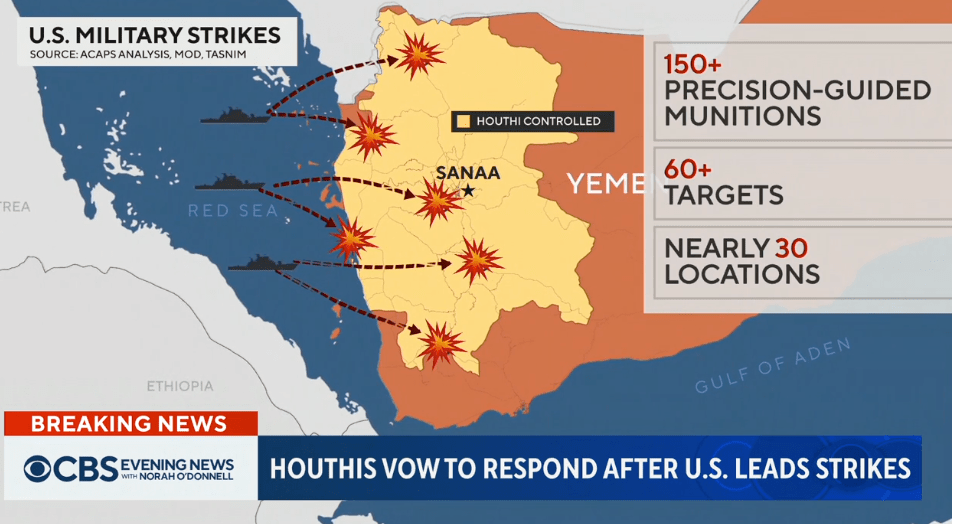
A military spokesman claimed today that they would continue to attack whenever the following occurred, such as the “transit of Israeli ships or those carrying goods to the occupied Palestinian ports,” and said they would carry on at “whatever the cost.”

This statement was hours after the United States and the UK targeted Houthi weapons that were used in targeting vessels traveling along the Red Sea.

Source: CBS News

Houthi officials have strongly criticized the attack on their lands, describing it as unjustified and “barbaric.”

They have also issued threats of further targeting Israeli ships or vessels heading towards the occupied Palestinian territories.

The U.S. President, Joe Biden, announced these strikes late on Thursday, marking an escalation of tensions that have been simmering in the Middle East since the Hamas terror attacks against Israel on October 7 and the subsequent Israeli Defense Forces’ campaign in the Gaza Strip.

From what we can deduce, the Houthis will not stop their attacks until the siege of the Gaza strip is withdrawn and the Palestinian people are no longer at risk.

Prediction: The Next Democratic Candidates.

With 2024 elections coming up just around the corner, one might wonder if Biden is mentally fit for another 4 years, let alone the rest of 2023.

Up to this point, the White house has been good to keep Biden out of the press and continuously gives him softball after softball in terms of white house briefings, press appearances, etc.

One has to wonder why they are working so hard to not only limit his appearances, but to control every narrative.

Joe Biden is clearly a puppet that is getting the strings pulled in every direction – Americans deserve better.

There is a good chance that the three main Democratic candidates are Biden, Kennedy, and Williamson. However, I am starting to think that Joe Biden doesn’t have a chance in hell for re-election.

To me, it’s clear that Joe Biden is not going to be selected for another term. Not only for his cognitive abilities, but his overall approval ratings.

It is my strong belief that RJK Jr. has a real shot and being the top democratic candidate for the 2024 elections.

Why is that? Is it because he is the best democratic candidate? Maybe… it’s not hard to do these days.

Here is why I believe he is the best:

  • He has the political chops from his family pedigree to back this up.
  • Following in Trump’s footsteps, in that he wants to drain the swamp to a certain degree.
  • Wants to get rid of the military complex that now spends up to 2 trillion dollars per year.
  • Going after big pharma when American’s trust in them is at an all-time low (smart).
  • Understands that we need to be fiscally conservative moving forward if we are going to save America as a country.
  • He is an experienced litigator and debater from his time as a environmental lawyer. This man is sharp and he does his research.

However, RFK Jr’s real advantage over others is his ability to market and promote himself effectively. He is a self-promoting machine. The best part – he is doing it all for free.

His best move has been going on highly trafficked podcasts to get his message out there. Podcasts such as the all in podcast and the Joe Rogan podcast have propelled his message to millions of listeners.

Last but not least, he is the esteemed author of The real Anthony Fauci that exposed the true fraud behind the vaccines.

What was once thought to be a conspiracy theory, turned out to be the cold hard truth. This has gained him millions of true fans and gives him a high degree of authority and trust.

The bottom line is that Kennedy really is the full package for the democratic nominee. He is going to be a strong candidate for republicans to go up against.