
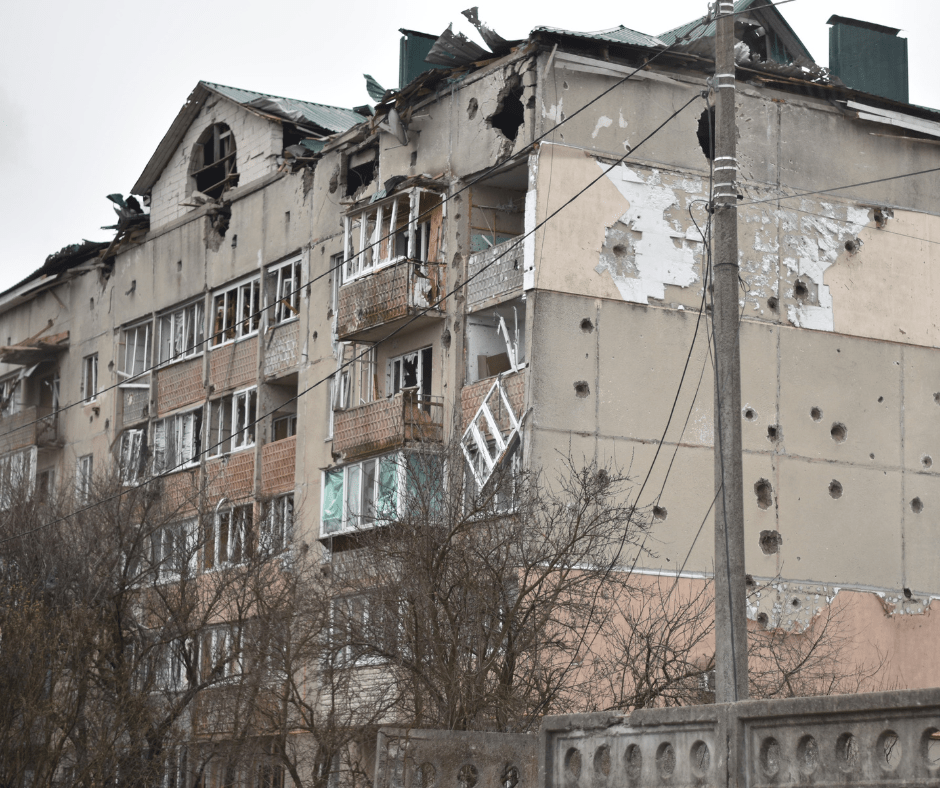
In order to understand why this is happening, we need to first comprehend where this is all stemming from. This will be best explained if we are able to take a quick history lesson on the subject.
Historical Background
The land known today as Israel and the Palestinian territories has been inhabited by various peoples throughout history, including the ancient Israelites and Philistines.
By the late 19th century, it was part of the Ottoman Empire, and this area was predominantly Arab and Muslim, with a small Jewish minority.
The late 19th and early 20th centuries saw the rise of Zionism, a movement among Jews to establish a national homeland in what was then Palestine. This led to increased Jewish immigration to the area, especially as Jews fled persecution in Europe.
After World War I, the League of Nations awarded Britain the mandate to govern Palestine. The Balfour Declaration of 1917, issued by Britain, supported the establishment of a “national home for the Jewish people” in Palestine but also called for protecting the rights of the existing non-Jewish communities. Tensions between Jewish and Arab communities grew over land and political rights.
In 1947, the United Nations proposed partitioning Palestine into separate Jewish and Arab states, with Jerusalem as an international city. The plan was accepted by Jewish leaders but rejected by Arab leaders.
In 1948, Israel declared independence the moment that the British mandate ended, leading to the first Arab-Israeli war. Hundreds of thousands of Palestinians fled or were expelled from their homes in what became Israel, creating a major refugee crisis and territorial disputes.
Results of that war:
- Israeli victory
- Partial Jordanian victory
- Palestinian Arab, Egyptian, and Syrian defeat
- Isreal gets to keep the land alloted by the partition plan that was set forth by the United Nations and captures the majority of the land allotted to the Arab state.
- Jordanian’s rule the west bank and Egyptians occupy the Gaza Strip.
There have been several wars and many efforts at peace since this event in 1948, including the 1967 Six-Day War, where Israel captured the West Bank, Gaza Strip, and East Jerusalem, territories that Palestinians claim for a future state.
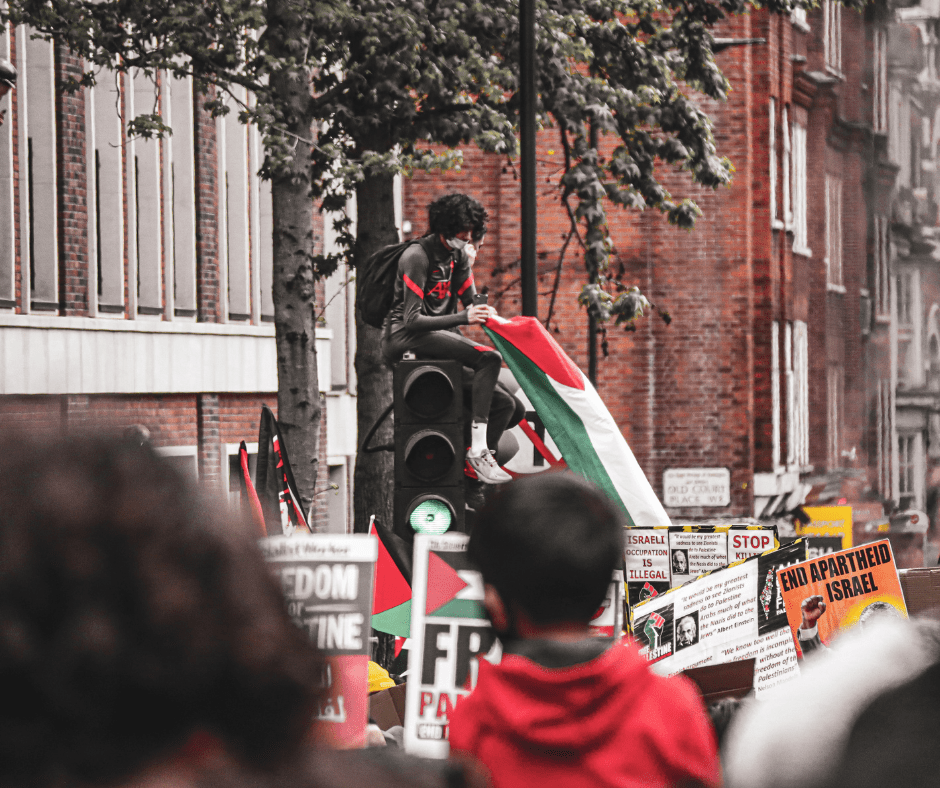
Despite various peace processes, including the Oslo Accords in 1993, significant disagreements remain over key issues such as borders, the status of Jerusalem, Israeli settlements in the West Bank, and Palestinian refugees’ right of return.
Today, the conflict between these two groups has continued to take a rocky path forward, especially since the recent attack on Oct 7th, 2023.
Current Status
Since the Oct 7th attack, there has been serious turmoil between both parties. Hamas, the Palestinian terrorist group that was responsible for this attack immediately retreated back behind the walls of the Gaza strip and went into hiding.
They have also taken fortified positions and have networks of tunnels all over the Gaza strip they continue to utilize.
It appears that Hamas have been involving a large amount of civilians in the conflict by using many people as human shields when fighting the Israelis.
Unfortunately Israelis have also had their share of Palestinian civilian casualties, especially from their coordinated air attacks.
Results of Oct 7th attack:
- 1,609 Hamas Militants Killed – 200 captured
- 1,143 Israelis killed (376 security forces, 767 civilians, 36 children)
- 3,400 Israeli civilians and soldiers wounded
- 247 Israeli civilians and soldiers taken captive
As many as 44 countries identified this attack as an act of terrorism, although some Arab and Muslim countries claim that it was Israel’s occupation of their own Palestinian territories that was the main cause.
As it stands, Israeli forces have clearly shown the upper hand and have driven Hamas, along with about one million Palestinians into the Rafah (the bottom left corner of Gaza strip that shares a border with Egypt).

President Biden has made it clear recently that he is on the same page with Netanyahu and is committed to help defeat Hamas entirely.
He is urging Netanyahu to allow most of these Palestinian refugees to get out while they still can, but Netanyahu wants to proceed regardless.
“Look, it’s either Israel or Hamas. There is no middle way,” Netanyahu said. “We can’t leave a quarter of the Hamas terror army in place. They’re there in Rafah. This would be equivalent to saying, you know, after the Allies fought back, gone through Normandy, went through Germany, and you’d say, well, we’ll leave a quarter of the Nazi army in place and we won’t go into Berlin, the last stronghold.”
Netanyahu also seems to have the full backing of the Israeli people. Unfortunately peace talks have mostly failed and it appears inevitable that Israeli forces will be going in soon.
 Elephantries