
Introduction
On September 17, 2024, Lebanon was rocked by a devastating series of pager bomb blasts that resulted in at least nine deaths and thousands of injuries. Hezbollah, the militant group with deep ties to Iran, swiftly blamed Israel for the attacks, escalating tensions in an already volatile region.
This tragic event highlights the complexity of Middle Eastern geopolitics, where Lebanon has long served as a battleground for proxy wars between regional powers like Iran and Israel.
The bombings are not isolated incidents but part of a larger picture of instability in Lebanon and the surrounding region. As the global community reacts, the potential for further escalation looms large, raising questions about what comes next for Lebanon, Israel, Hezbollah, and other players in the Middle Eastern arena.
Historical Background on Hezbollah and IsraeL

To understand the significance of the recent pager bomb blasts, it’s essential to explore the long history of tension between Hezbollah and Israel.
Hezbollah was formed in the early 1980s during the Lebanese Civil War in response to the Israeli invasion of Lebanon in 1982. Backed by Iran, Hezbollah began as a resistance movement aimed at ejecting Israeli forces from southern Lebanon.
Over the years, it has evolved into a powerful political and military organization, operating as both a militia and a political party within Lebanon.
Hezbollah’s Growth and Iran’s Influence
Since its inception, Hezbollah has been a major player in Lebanese politics and a proxy for Iran’s influence in the region.
Iran provides Hezbollah with financial support, weapons, and training, allowing the group to maintain its operations and challenge Israeli dominance in the region.
Hezbollah has used its resources to build a significant military presence in southern Lebanon, where it frequently clashes with Israeli forces.
Key Confrontations:
The relationship between Hezbollah and Israel is marked by numerous conflicts, the most significant of which was the 2006 Lebanon War.
This conflict began when Hezbollah launched a cross-border raid, capturing two Israeli soldiers. Israel responded with a massive military operation, resulting in widespread destruction in Lebanon and the displacement of nearly one million people.
Despite the heavy toll on Lebanon, Hezbollah claimed victory by withstanding Israel’s military might, further solidifying its status as a resistance group.
Since the 2006 war, Hezbollah has grown even stronger, both militarily and politically. It has gained valuable combat experience fighting alongside Syrian government forces in the Syrian Civil War, which has helped it refine its military strategies.
Hezbollah’s participation in Syria has also deepened its relationship with Iran, which views the group as a key ally in its regional strategy to counter Israel and other U.S.-aligned nations.
The September 17 Bombing Incident
The pager bomb blasts that occurred on September 17, 2024, represent a new and dangerous escalation in the ongoing conflict between Hezbollah and Israel. Pager bombs are relatively low-tech explosive devices, but their effectiveness lies in their ability to be remotely detonated in crowded areas, causing maximum casualties and damage.
The Timeline of the Attack
Multiple bombs exploded in Beirut and other densely populated areas across Lebanon. The attacks appeared to be coordinated, targeting civilian spaces like marketplaces, bus stops, and residential neighborhoods during peak hours.
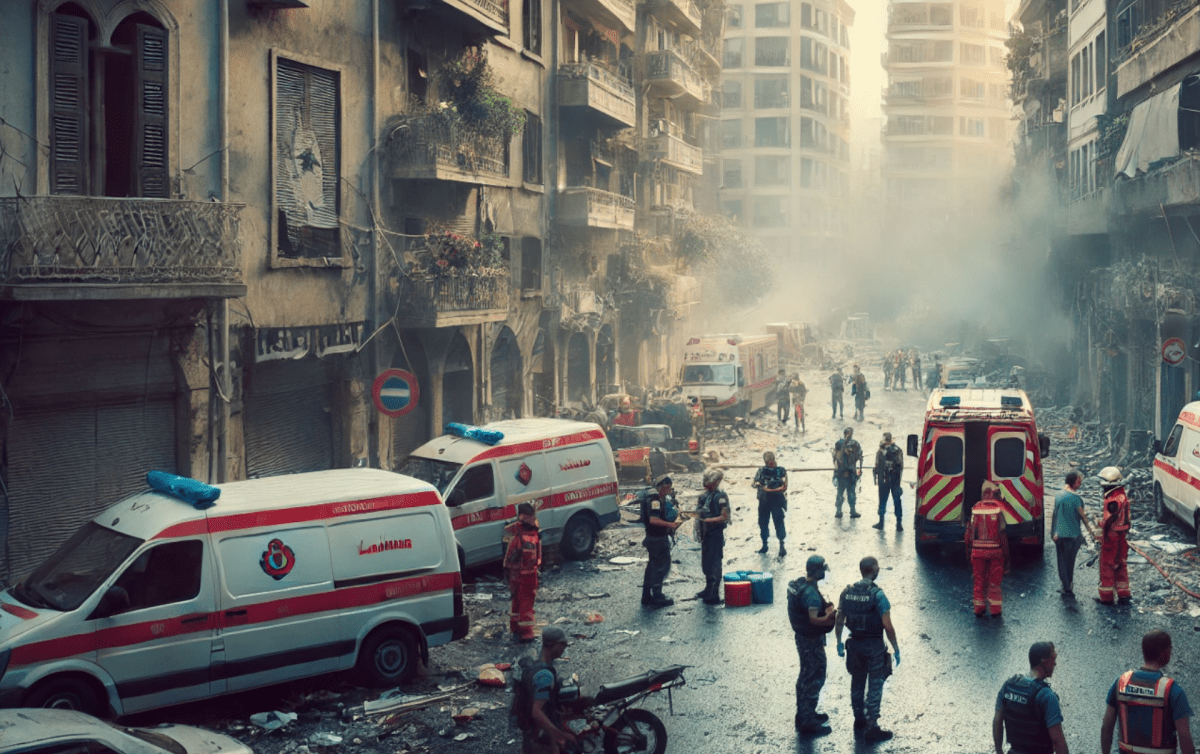
The choice of targets suggests that the perpetrators aimed to cause widespread panic and disruption. Rescue teams struggled to respond to the chaos, as hospitals, already weakened by Lebanon’s economic crisis, were quickly overwhelmed by the influx of injured civilians.
Immediate Aftermath
In the wake of the bombings, Lebanon was plunged further into turmoil. The death toll quickly rose, with at least nine confirmed fatalities and over 2,800 injured.
Hospitals in Beirut, already operating at diminished capacity due to shortages of medical supplies, were unable to keep up with the sudden demand for emergency care.
Ambulances rushed victims to hospitals, but many were turned away due to overcrowding. The scenes of chaos were compounded by Lebanon’s ongoing financial and political crises, which have left the country without a functioning government for months
Hezbollah’s Response and Accusations Against Israel
Hezbollah wasted no time in accusing Israel of orchestrating the bombings. Hassan Nasrallah, the group’s leader, issued a statement condemning the attacks and vowing retaliation.
Hezbollah has long positioned itself as a defender of Lebanon against Israeli aggression, and this narrative was reinforced in the aftermath of the bombings.
In Nasrallah’s speech, he framed the attacks as part of Israel’s ongoing efforts to destabilize Lebanon and undermine Hezbollah’s influence in the region.
Israel’s Denial
As is often the case in such incidents, Israel neither confirmed nor denied involvement in the attacks. However, Israeli officials have historically expressed concern over Hezbollah’s growing power in Lebanon and its military capabilities.
Israel has conducted numerous airstrikes on Hezbollah targets in Syria in recent years, attempting to curb the group’s access to advanced weaponry supplied by Iran. Given this context, it’s not surprising that Hezbollah would point fingers at Israel following the bombings.
The Propaganda War
Beyond the physical destruction, the pager bomb blasts have intensified the propaganda war between Hezbollah and Israel.
Hezbollah is using the attacks to rally support among its base, positioning itself as the protector of Lebanon against foreign aggressors. Israel, on the other hand, has been careful to maintain plausible deniability, while still warning of the dangers posed by Hezbollah’s growing influence.
Regional and International Repercussions
The September 17 bombings have far-reaching implications beyond Lebanon and Israel. The Middle East is already a hotbed of geopolitical tensions, and this latest escalation could have ripple effects throughout the region.
Iran’s Role
At the heart of the conflict between Hezbollah and Israel is Iran, which has provided Hezbollah with financial and military support for decades.
Iran views Hezbollah as a key component of its strategy to project power in the Middle East, particularly as a counterbalance to Israel. In the wake of the bombings, Iran could choose to increase its support for Hezbollah, potentially leading to a broader conflict between Israeli and Iranian forces.
Potential Iranian Retaliation:
If Iran believes that Israel was behind the bombings, it could retaliate by stepping up its military activities in Syria, Iraq, or other areas where it has a presence.

This could further complicate the already fragile situation in these countries, drawing in other regional actors like Saudi Arabia, Turkey, and Russia.
The Role of the United States
The United States has a complicated relationship with Lebanon, Israel, and Hezbollah.
While the U.S. is a staunch ally of Israel, it has also expressed concerns about the humanitarian crisis in Lebanon. The Biden administration has urged both Israel and Hezbollah to avoid further escalation, but the U.S. has limited leverage over Hezbollah due to its designation as a terrorist organization by the U.S. government.
However, Washington may play a key role in diplomatic efforts to prevent a full-scale war from breaking out.
Impact on the Global Oil Market
The Middle East is a critical hub for global energy supplies, and any conflict in the region has the potential to disrupt oil production and shipping lanes.
Lebanon itself is not a major oil producer, but its proximity to important shipping routes in the Eastern Mediterranean means that further instability could lead to disruptions in global oil markets.
Even the perception of increased risk in the region could drive up oil prices, impacting economies worldwide.
Humanitarian Impact of the BombinG
The immediate humanitarian consequences of the pager bomb blasts are devastating. In addition to the tragic loss of life, the bombings have exacerbated Lebanon’s existing crises.
The country has been grappling with an economic collapse, widespread poverty, and a lack of basic services like healthcare and electricity. The bombings have stretched Lebanon’s resources even thinner.
Healthcare System in Crisis
Lebanon’s healthcare system has been on the brink of collapse for months, with hospitals facing severe shortages of medicines, medical supplies, and staff.
The influx of victims from the bombings has pushed many hospitals beyond their breaking point. Ambulances were forced to transport victims to facilities as far away as Tripoli and Sidon, but even these hospitals were ill-equipped to handle the number of wounded.
Displacement and Refugee Crisis
Lebanon is already home to hundreds of thousands of refugees from Syria and Palestine, many of whom live in overcrowded camps with little access to basic services.
The bombings have displaced even more people, with thousands of Lebanese citizens fleeing their homes in search of safety. The refugee crisis is likely to worsen in the coming weeks, as the country grapples with the fallout from the bombings.
Conclusion
The pager bomb blasts in Lebanon on September 17, are a grim reminder of the fragility of peace in the Middle East.
As Hezbollah and Israel trade accusations, the potential for further violence looms large. The situation is further complicated by the involvement of external powers like Iran and the United States, each with its own strategic interests in the region.
Lebanon, a country already teetering on the edge of collapse, now faces an even more uncertain future.
The humanitarian crisis continues to deepen, with no clear end in sight. As the international community watches closely, the question remains: will this latest tragedy lead to de-escalation or a broader conflict that engulfs the entire region?

 Elephantries